Every time WWE expands, the same quiet fear ripples through whichever fanbase is about to be brought into the fold.
Not the fear that WWE will fail at it. WWE rarely fails at scale.
The fear is simpler than that.
That whatever made the acquired product feel like itself will slowly disappear underneath the WWE machine.
Lucha fans walked into the AAA acquisition carrying that exact fear. They have decades of receipts. Promotions get bought, restructured, rebranded, and eventually flattened into the parent company's house style until the original thing barely feels recognizable anymore.
And then something unexpected happened.
The AAA rollout did not feel like the usual pattern.
WWE Didn't Buy AAA To Turn It Into RAW In Spanish
WWE acquired AAA in April 2025. On paper, that should have triggered every alarm longtime lucha fans have learned to trust. But the messaging coming out of WWE did not sound like assimilation.
It sounded like preservation.
AAA was founded in 1992 by Antonio Peña. The pacing, presentation, match psychology, and storytelling rhythms all carry a cultural fingerprint that does not cleanly translate into WWE's main roster style.
And rather than flatten that fingerprint, WWE kept the Peña family creatively involved and repeatedly framed the acquisition as a partnership instead of an absorption.
That was the first sign something might actually be different.
The second sign carried even more weight.
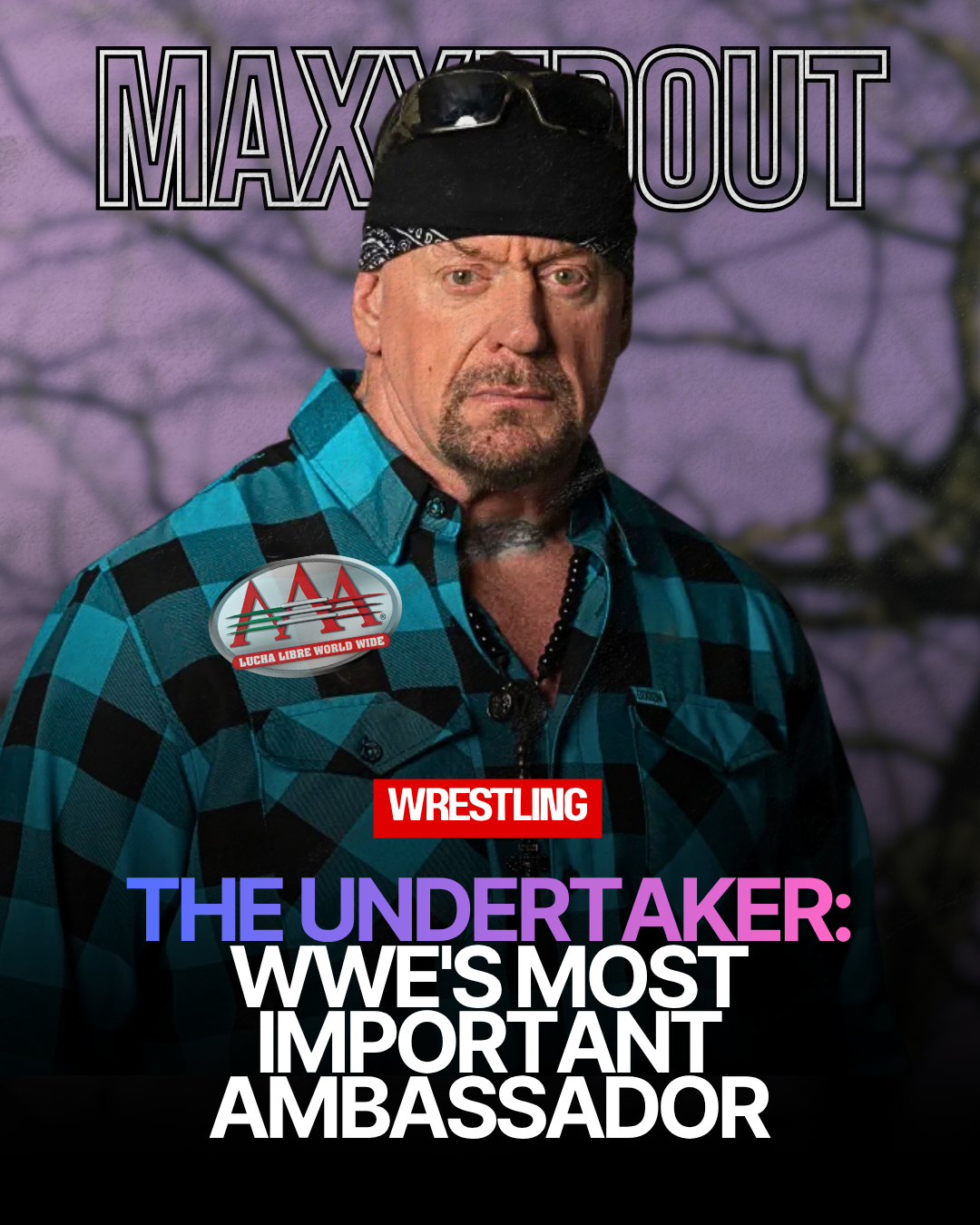
Undertaker Changed The Emotional Optics Of The Entire Deal
Mark Calaway became part of AAA's evolving creative structure alongside Paul Levesque, Jeremy Borash, Konnan, and Dorian Roldán.
On paper, that is one voice among several.
In wrestling culture, it means far more than that.
Undertaker is one of the few remaining figures who carries respect across generations, companies, and fanbases. Fans do not hear him as corporate messaging. They hear him as wrestling credibility.
So when he publicly said:
"I'm not trying to make AAA into RAW or SmackDown WWE."
...the entire conversation shifted.
That quote did something corporate wrestling messaging almost never accomplishes. It acknowledged the exact fear fans were carrying instead of pretending it did not exist.
And more importantly, WWE's early decisions have backed the quote up.
Cultural Overlap Instead Of Cultural Replacement
The proof showed up in the booking, not the press releases.
The Grande Americano storyline gave WWE audiences a way into AAA presentation without forcing AAA to suddenly feel like WWE television. Dominik Mysterio became connective tissue between the two audiences. To WWE fans, he is one of the company's best modern heat magnets. To lucha fans, he represents lineage.
Different audiences connected to him for different reasons, and the crossover allowed both reactions to exist naturally.
That matters more than people realize.
Because most wrestling collaborations eventually stop feeling like collaborations. One side becomes developmental. One side becomes nostalgia inventory. One side quietly turns into a feeder system pretending to be a partnership.
We've watched that cycle happen for decades.
AAA does not currently feel like any of those things.
That is the part fans are responding to.
The Numbers Feel Like Belief, Not Curiosity
Worlds Collide pulled 773,000 live concurrent viewers and more than 4.1 million viewers within the first 24 hours.
Those are not nostalgia numbers.
Those are expansion numbers.
That kind of engagement only happens when audiences start stepping outside their normal wrestling bubble because they believe something meaningful is happening there.
That is the real success of this partnership so far.
Not simply adding another promotion to WWE's portfolio.
Creating genuine crossover curiosity between two different wrestling cultures.
Why Undertaker Carries More Weight Than Triple H Right Now
Triple H represents WWE leadership.
Undertaker represents wrestling trust.
That distinction matters when trying to calm a fanbase that has spent years fearing corporate homogenization across wrestling.
Calaway publicly emphasizing preservation over replacement gave this partnership legitimacy before fans even fully saw the final product.
And now the audience response is starting to validate the approach.
WWE may have finally discovered something wrestling companies historically struggle to maintain:
Fans are willing to embrace crossover wrestling when both sides still feel recognizable.
That sounds obvious.
In wrestling, it almost never lasts.
AAA Might Quietly Become One Of WWE's Most Important Long-Term Projects
AAA no longer feels like a niche promotion sitting outside WWE's ecosystem.
It feels like part of WWE's actual long-term global strategy.
But unlike previous expansion attempts, this one already has several things working in its favor:
• Cultural legitimacy • Established fan loyalty • Cross-market storytelling potential • Audience curiosity • Trusted creative leadership
That combination is rare.
If WWE continues protecting AAA's identity while expanding its visibility, this could become something wrestling companies have chased for decades:
A sustainable crossover system where both brands grow without one consuming the other.
And the person helping fans believe in that possibility is not a corporate executive.
It's The Undertaker.
MaxxedOut's Takeaway
For years, WWE's expansion strategy often felt transactional.
Acquire. Integrate. Standardize.
AAA feels different because fans can still recognize the soul of the product underneath the partnership.
The pacing still feels like AAA. The presentation still feels like AAA. The audience still feels like AAA.
That balance is the entire game.
And right now, Undertaker is functioning as the trust bridge between WWE's global machine and a fanbase that had every reason to assume assimilation was inevitable.
The real test comes later.
Because wrestling history says partnerships like this eventually drift toward one identity swallowing the other.
This time might be different.
At least for now, WWE finally seems to understand that the value of AAA was never in turning it into WWE.
The value was keeping it recognizable while letting more of the world see it.